

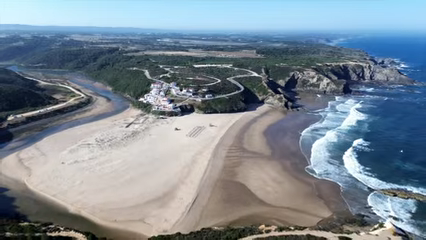
Best Beaches in Portugal: Top Picks by Region
What Makes Portugal’s Beaches Worth Visiting?
Portugal’s beaches are worth visiting for their regional variety, ranging from the amber sea cliffs of the Algarve to the black volcanic sand of the Azores. The Algarve alone was named the world’s best beach destination at the 2024 World Travel Awards.
Praia da Marinha, tucked between Albufeira and Portimão in the Algarve, sums up why: sandstone cliffs, natural rock arches, and clear green water reachable only by a narrow gorge path. That single beach explains the appeal, but Portugal’s coastline runs the length of the country, from the Spanish border in the south to Porto in the north, plus two Atlantic archipelagos further out, so no single region tells the whole story.
What Are the Best Beaches in the Algarve?
The Algarve holds Portugal’s most famous beaches, known for golden limestone cliffs, sea caves, and calm, clear water.
- Praia da Marinha: sandstone cliffs and rock arches near Caramujeira, widely considered the region’s signature beach.
- Benagil Cave: a sea cave with a natural skylight, reached mainly by boat, kayak, or paddleboard tour from nearby beaches.
- Praia da Falésia: a long sweep of sand beneath red cliffs near Albufeira, with plenty of room even in peak season.
- Camilo Beach: a small cove near Lagos reached by a long wooden staircase, calm and clear but crowded in summer.
- Praia da Luz: a gently sloping, Blue Flag family beach near Lagos with watersports centers and beachfront restaurants.
- Sagres and Cabo de São Vicente: cliffs at the southwestern tip of mainland Europe, with surf beaches on either side of the point.
What Are the Best Beaches Near Lisbon?
Lisbon’s nearby beaches split into calm river-mouth beaches and rougher Atlantic surf beaches, both reachable within an hour of the city.
- Praia do Guincho: a windswept Atlantic beach north of Cascais known for surfing, windsurfing, and kitesurfing competitions.
- Praia da Adraga: a dramatic cove near Sintra framed by sea stacks, popular with photographers and seafood restaurants alike.
- Costa da Caparica: a 15-kilometer stretch of sand south of the Tagus River, with calmer sections near town and surf breaks further along.
- Praia dos Galapinhos: a turquoise cove inside Arrábida Natural Park, sheltered enough for calm swimming despite the wild coastline around it.
- Praia das Maçãs: a small beach village near Sintra reachable by a tram from town, popular for a relaxed day trip.
What Are the Best Beaches on Portugal’s Silver Coast?
The Silver Coast, north of Lisbon, is best known for Nazaré’s record-breaking big waves and Ericeira’s status as a world surf reserve.
Nazaré’s Praia do Norte holds the confirmed record for the largest wave ever surfed: an 86-foot wave ridden by Sebastian Steudtner in October 2020, made possible by an underwater canyon roughly 200 kilometers long that funnels swell directly at the coast. Several larger, unofficial rides have been claimed at the same beach since, though none had completed the formal measurement and confirmation process at the time of writing. The big-wave season runs from around October through March; the calmer main beach on the south side of the Nazaré lighthouse suits regular swimming the rest of the year. Ericeira, a 40-minute drive north of Lisbon, holds Europe’s only World Surf Reserve designation and combines whitewashed village streets with a string of surf breaks along its coastline.
What Are the Best Beaches in the Azores and Madeira?
Portugal’s two Atlantic archipelagos offer volcanic beaches unlike anything on the mainland, from black sand coves to geothermal pools. Both Madeira and the Azores rose from underwater volcanoes, which shapes their coastlines far more than in the Algarve or near Lisbon: cliffs and dark volcanic sand are the norm, and a few sandy exceptions stand out precisely because they are exceptions.
- Porto Santo: a 9-kilometer golden sand beach on Madeira’s sister island, reached by a 40-minute ferry or short flight from Madeira, with sand reputed locally for therapeutic properties.
- Calheta and Machico: Madeira’s two main golden-sand beaches, both built up with imported sand since Madeira’s own coastline is mostly volcanic cliff and pebble.
- Seixal: a dramatic black volcanic sand beach on Madeira’s north coast, backed by steep, forested cliffs.
- Porto Moniz: natural volcanic rock pools on Madeira’s northwestern tip, filled by Atlantic waves and adapted with walkways for swimming.
- Praia do Fogo and Ponta da Ferraria: geothermal beaches on São Miguel island in the Azores, where volcanically heated water meets the sea.
- Praia Formosa: a golden-sand beach on Santa Maria, the warmest and sunniest island in the Azores.
When Is the Best Time to Visit Portugal’s Beaches?
Most of Portugal’s beaches are warmest and busiest from June through September, while Nazaré’s big-wave season runs on the opposite calendar, October through March.
The Algarve stays mild enough for a beach walk even in winter, though swimming water temperatures drop outside summer. The Azores and Madeira have a narrower comfortable swimming window, generally late spring through early autumn, since the surrounding Atlantic water runs cooler than along the mainland’s southern coast.
What Do Visitors Need to Know Before Visiting Portuguese Beaches?
A few practical details apply across most Portuguese beaches: the Blue Flag rating system, tide timing, and seasonal dog restrictions.
- Blue Flag beaches meet international standards for water quality, safety, and facilities, and the flag is displayed at qualifying beaches each season.
- Many of the Algarve’s smaller cove beaches shrink significantly at high tide, so checking a tide table before visiting a small beach avoids arriving to find little sand left.
- Atlantic-facing beaches, including most beaches near Lisbon and on the Silver Coast, can have stronger currents than the more sheltered Algarve coves; posted flag warnings indicate swimming conditions.
- Dogs are generally restricted from popular beaches during the peak season, from June 1 through September 30, though designated dog-friendly beaches exist away from the busiest areas.
Which Portuguese Beach Fits a Given Trip?
The right Portuguese beach depends mainly on what the trip is built around: families and calm swimming, surfing, or a distinctly volcanic landscape.
Families and swimmers tend to do best in the Algarve’s sheltered coves or the calmer stretches of Costa da Caparica. Surfers head to Nazaré, Guincho, or Ericeira, depending on skill level and the season. Travelers chasing something more unusual, geothermal pools, black volcanic sand, or a 9-kilometer stretch of golden beach on a quiet island, find that in the Azores, Madeira, or Porto Santo.
Common Questions About Portugal’s Best Beaches
Is Benagil Cave Accessible Without a Boat Tour?
Rarely in practice. Most visitors reach the cave by boat, kayak, or paddleboard tour from nearby beaches such as Praia de Benagil or Carvoeiro; swimming to it independently is possible in calm conditions but not recommended without local guidance.
Are Portugal’s Beaches Good for Swimming?
Yes, though water temperature and wave conditions vary by coast. The Algarve’s south-facing beaches tend to have calmer, warmer water than the Atlantic-facing beaches near Lisbon and the Silver Coast, which can have stronger currents and cooler water even in summer.
Do Portugal’s Beaches Charge an Entry Fee?
No, public beach access in Portugal is generally free. Some facilities, such as the volcanic pools at Porto Moniz in Madeira, charge a small entry fee for maintained swimming areas.
Sources
- Away Lands: 13 Best Beaches and Beach Towns in the Algarve
- Oliver’s Travels: 7 Stunning Beaches Near Lisbon
- Wikipedia: List of Surfing Records
- Nazaré Portugal Tourism: Surfing in Nazaré
- BestBeachReviews: Best Madeira Beaches
- Lotus Eaters Travel: Madeira vs the Azores

Georgia Williams writes for Best Beaches Near Barcelona by riding the same Rodalies trains she sends readers to catch. She has done the quick R2 Sud run out to Castelldefels and Sitges more times than she can count, and the longer hauls north to Calella, Blanes, and the Costa Brava coves around Tossa de Mar, Roses, and Cadaqués.
She is not chasing sponsorships and she does not work with tourism boards. She has stood on enough train platforms recalculating a ruined plan to know that a beach photographed at sunrise with nobody in frame tells you almost nothing about what it looks like at noon in July.
Her writing compares sand, water, and crowd levels town by town, and says plainly when a popular spot has stopped being worth the trip. She also says when an overhyped beach is still genuinely good, because contrarianism for its own sake helps no one packing a beach bag on a Friday morning.