

Best Beaches Near Barcelona: 12 Beaches Worth the Trip From the City
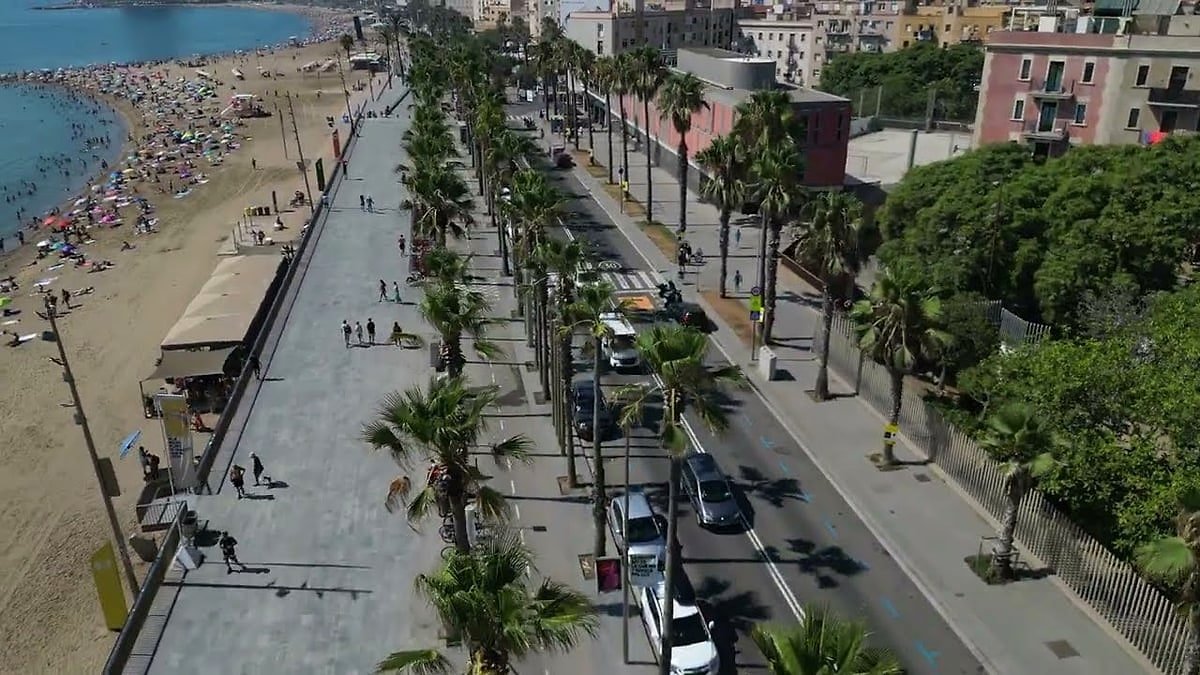
The best beaches near Barcelona sit along two stretches of Catalonia’s coast. Four lie southwest of the city on the Costa del Garraf, reachable in 25 to 45 minutes by train.
Eight lie northeast, split between the Maresme coast and the Costa Brava, with travel times from 25 minutes to 2.5 hours. This guide compares all 12, with exact distances, travel times, and what sets each one apart.
Barcelona has its own 9 city beaches, but many travellers want wider sand, calmer water, or a different town entirely. The towns below deliver that within a short ride from the city centre.
For planning inside the city, use the Barcelona beach guide.
What Are the Best Beaches Near Barcelona at a Glance?
The table below lists all 12 beach towns near Barcelona, ordered by distance from the city centre.
Two beaches near Barcelona stand out as the closest options in each direction. Castelldefels is the nearest southwest beach at 20 kilometres.
El Masnou is the nearest northeast beach at 16 kilometres. Both sit on direct commuter rail lines and work as half-day trips.
What Are Barcelona’s Best City Beaches?
Each of Barcelona’s 9 beaches has a different character, length, and crowd. The table below compares them by length and main use, based on Barcelona City Council figures.
Barceloneta Beach
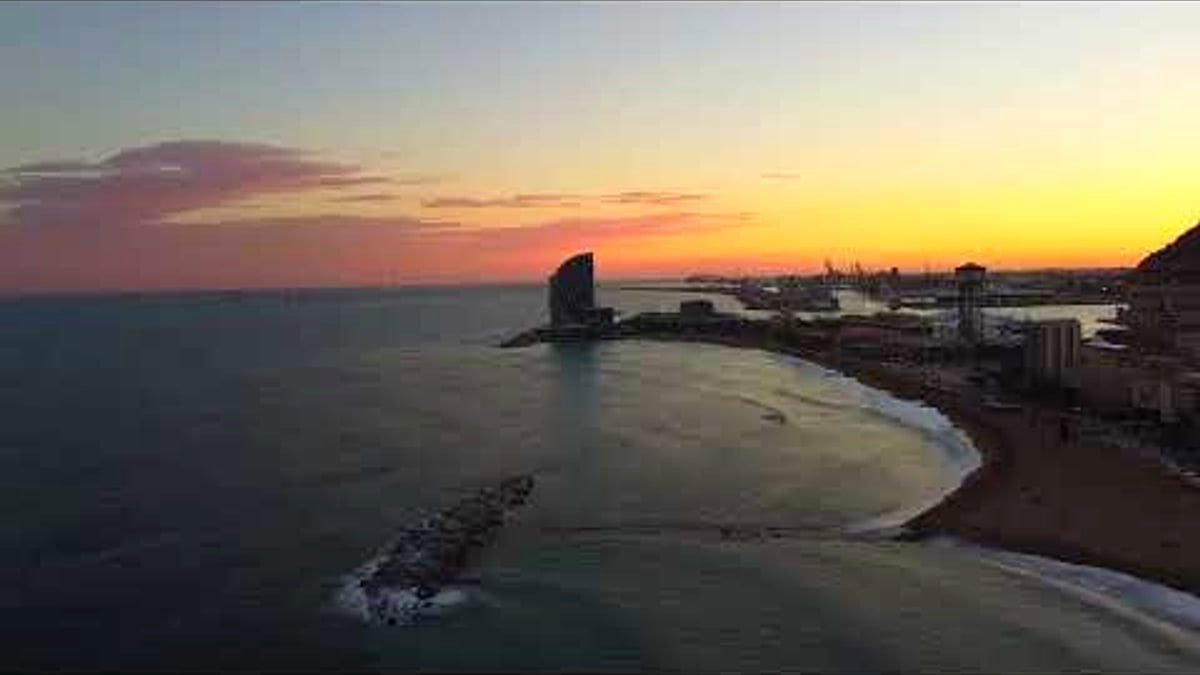
Barceloneta is the beach most people mean when they search for “Barcelona beach.” It measures 422 metres and sits at the foot of the Barceloneta neighbourhood, a 15-minute walk from the Gothic Quarter. An arcade of restaurants and bars runs along the top of the sand. The beach includes the Espai de Mar accessibility zone, which offers an assisted bathing service for people with disabilities.
For overnight coastal bases, compare the beach towns near Barcelona.
Sant Sebastià Beach
Sant Sebastià is Barcelona’s oldest and one of its longest beaches, at approximately 660 metres. It sits beside several historic sailing and swimming clubs. Around 70% of users are residents of Barcelona, most from the nearby Ciutat Vella district, making it a more local alternative to Barceloneta.
Bogatell Beach
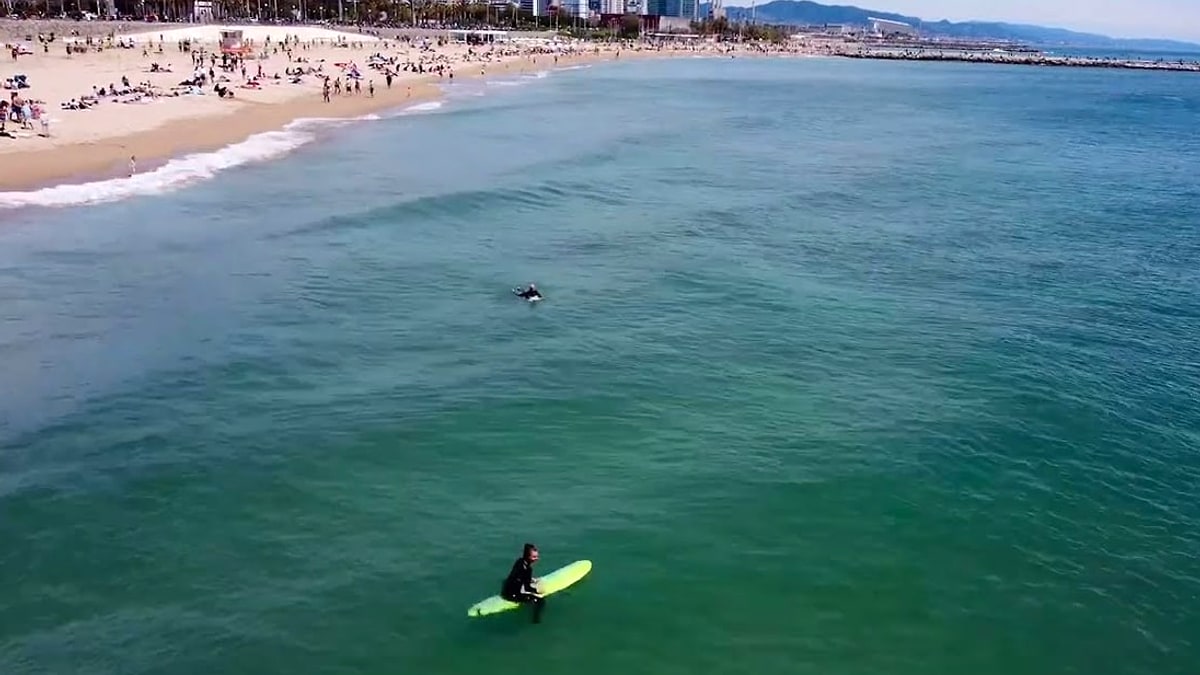
Bogatell is Barcelona’s longest beach at 702 metres and its most visited, according to city council data. It carries a Blue Flag rating and includes a football pitch, a volleyball court, and two table-tennis tables. A naturist section sits at the Mar Bella end.
Nova Icària Beach
Nova Icària sits next to the Olympic Port, protected by the harbour’s breakwater. This creates the calmest water of any Barcelona beach. Families and groups of friends use it most, and a row of restaurants and beach bars lines the promenade.
What Are the Best Beaches South of Barcelona?
The four beaches south of Barcelona sit on the Costa del Garraf, all served by the R2 Sud train line.
Castelldefels
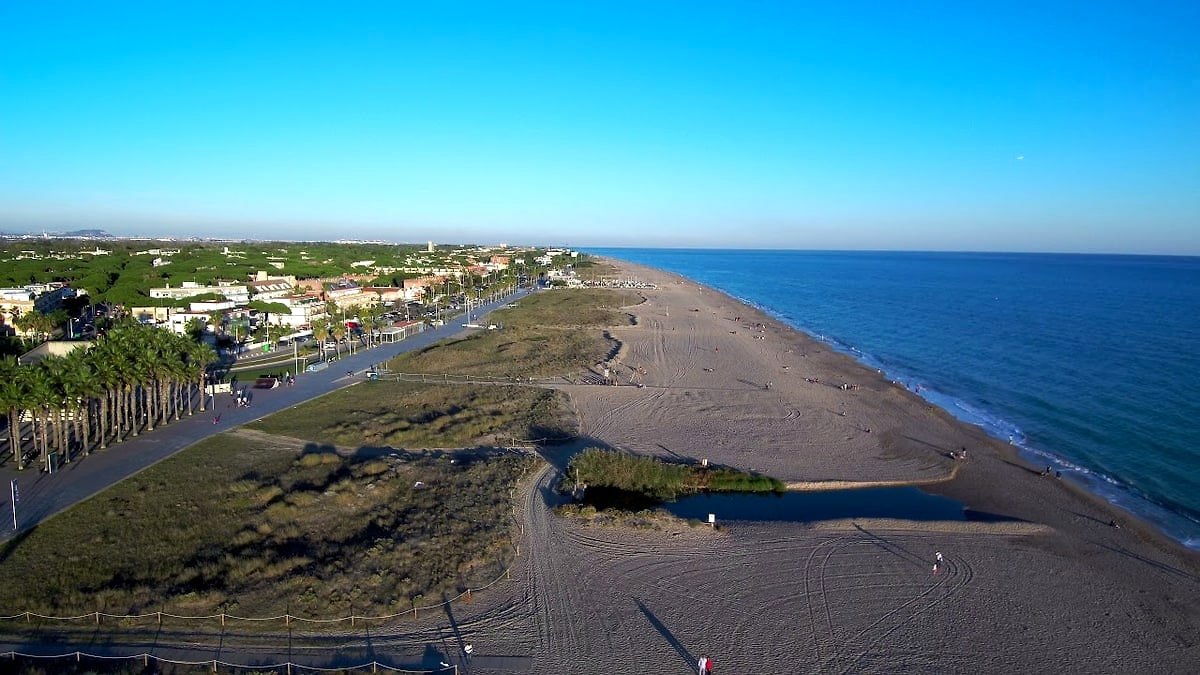
Castelldefels is 20 kilometres southwest of Barcelona, a 25 to 30 minute train ride on the R2 Sud line. At 4.8 kilometres long and up to 90 metres wide, its beach is the longest near the city, with a promenade running its full length and lined with bars and restaurants.
Steady afternoon wind makes it a regular spot for windsurfing and kitesurfing. The Garraf Natural Park borders the town to the south, with hiking trails leading up into the hills.
Garraf
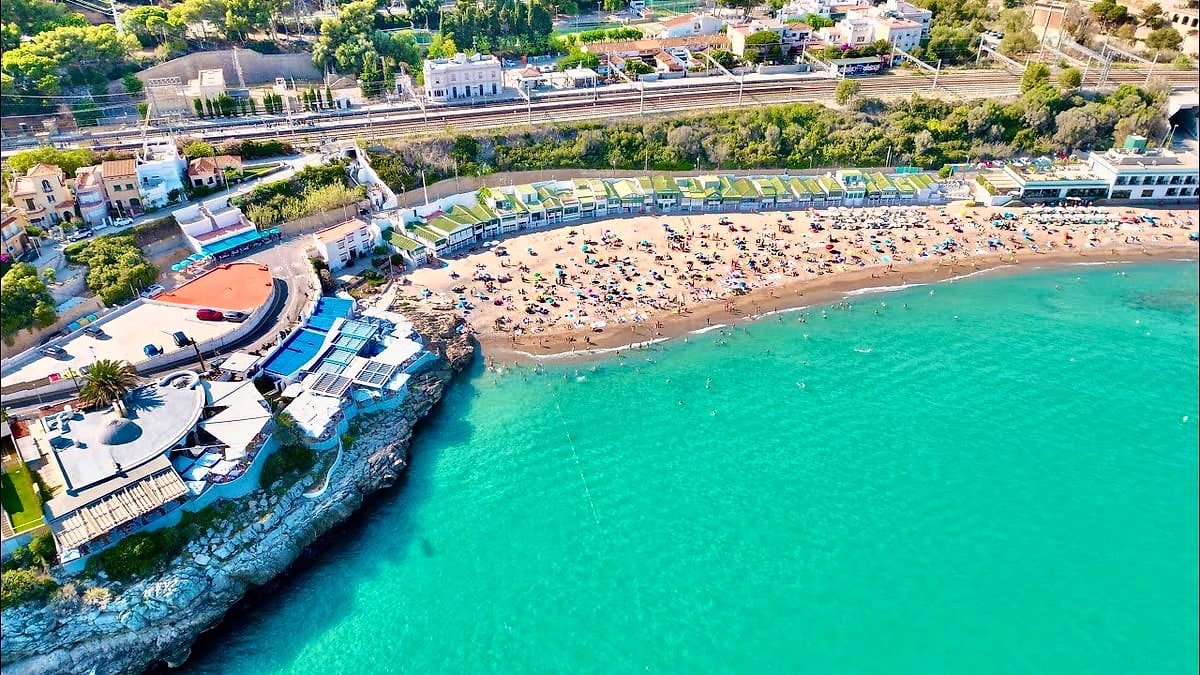
Garraf is 27 kilometres southwest, a 35 to 40 minute train ride. The beach measures around 350 metres and sits in a sheltered bay below steep cliffs.
Rows of green and white fishermen’s huts, protected for their historic value, line the sand. The Soho House members’ club, Little Beach House Barcelona, occupies the southern end of the beach.
Garraf-specific planning is covered in Little Beach House Barcelona, and broader destination comparisons sit in the Tulum alternatives in Europe guide.
Sitges
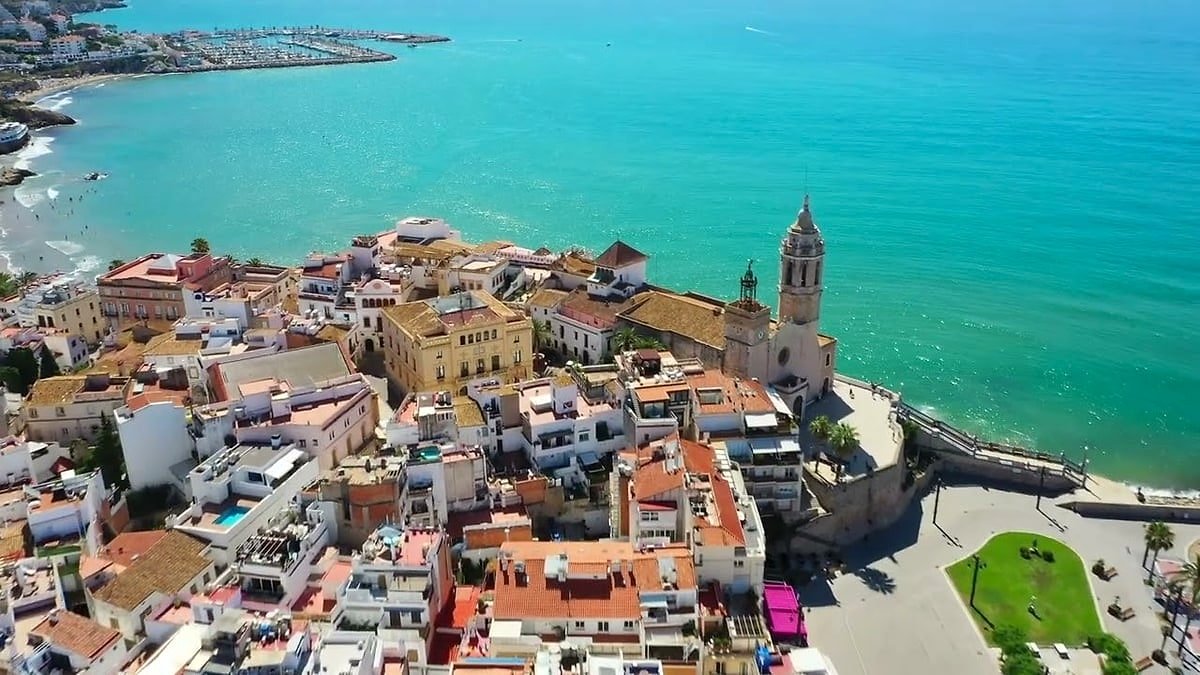
Sitges is 35 kilometres southwest, a 35 to 40 minute train ride. The town has 17 beaches along its coastline, more than any other town on this list, ranging from family beaches in the centre to quieter coves on its eastern and western edges.
A walkable Old Town sits behind the central beaches, and an annual carnival each February draws visitors from across Spain.
Sitges also holds one of Europe’s largest LGBT-friendly tourism scenes, centred on Bassa Rodona beach in the town centre, with Balmins beach at the eastern edge serving as a mixed naturist beach.
Vilanova i la Geltrú
Vilanova i la Geltrú is 40 kilometres southwest, a 35 to 45 minute train ride. It remains a working fishing port, with fewer tourists than its neighbours and several long, uncrowded beaches.
For a wider regional list, see the best beaches in Catalonia.
Its coastline covers nearly 6 kilometres of sand, including Ribes Roges beach near the marina. A Rambla lined with local bars runs through the old town, leading to Plaça de la Vila, a 19th-century neoclassical square.
What Are the Best Beaches North of Barcelona on the Maresme Coast?
The Maresme coast runs northeast of Barcelona on the R1 train line, offering the shortest travel times outside the southwest corridor.
El Masnou
El Masnou is 16 kilometres northeast, a 25 to 30 minute train ride on the R1 line, making it the closest beach to Barcelona in this direction.
The town has more than 3 kilometres of sandy coastline and draws a mostly local crowd rather than tourists. Two stations, Masnou and Ocata, serve the beach directly.
Sant Pol de Mar
Sant Pol de Mar is 45 kilometres northeast, a 50 to 60 minute train ride on the R1 line. The town centres on a small, sheltered cove below a hillside of stone houses.
It is also home to Sant Pau, a three-Michelin-star restaurant, which draws visitors who combine a beach day with fine dining.
Calella
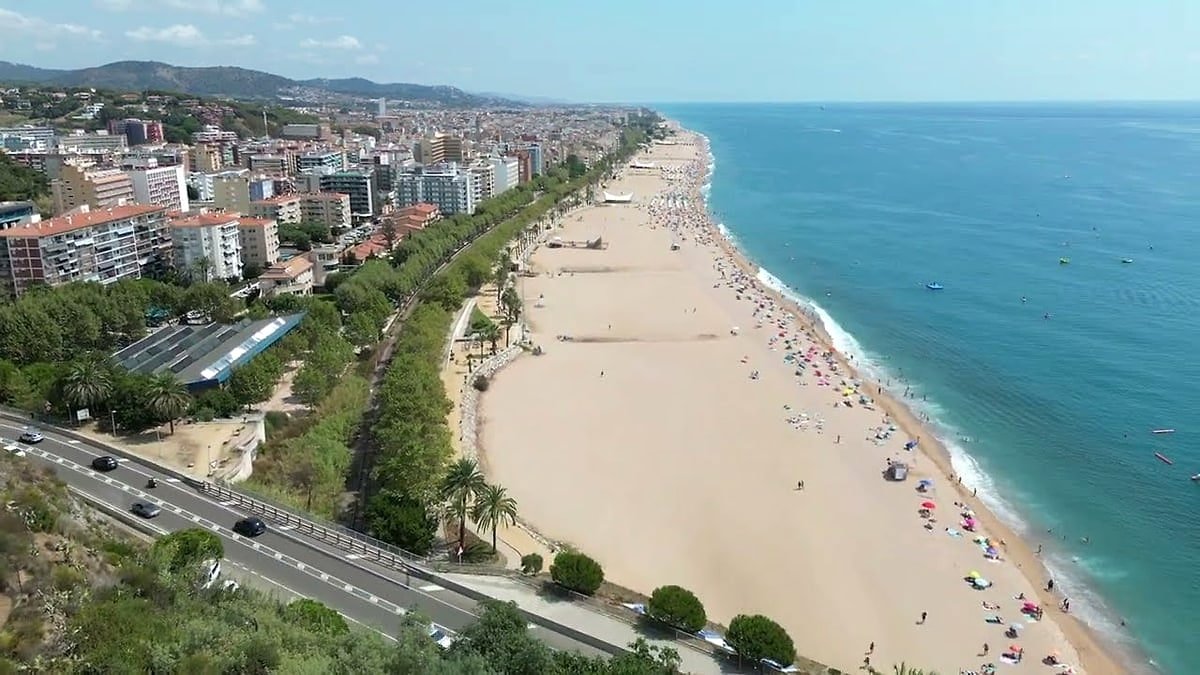
Calella is 50 kilometres northeast, also a 50 to 60 minute ride on the R1 line. It has one of the longest beaches on the Maresme coast, Platja Gran, stretching for roughly 2 kilometres, and a working 19th-century lighthouse at its edge.
Calella markets itself as the tourist capital of the Maresme, with more hotels and beachfront bars than its smaller neighbours.
Blanes
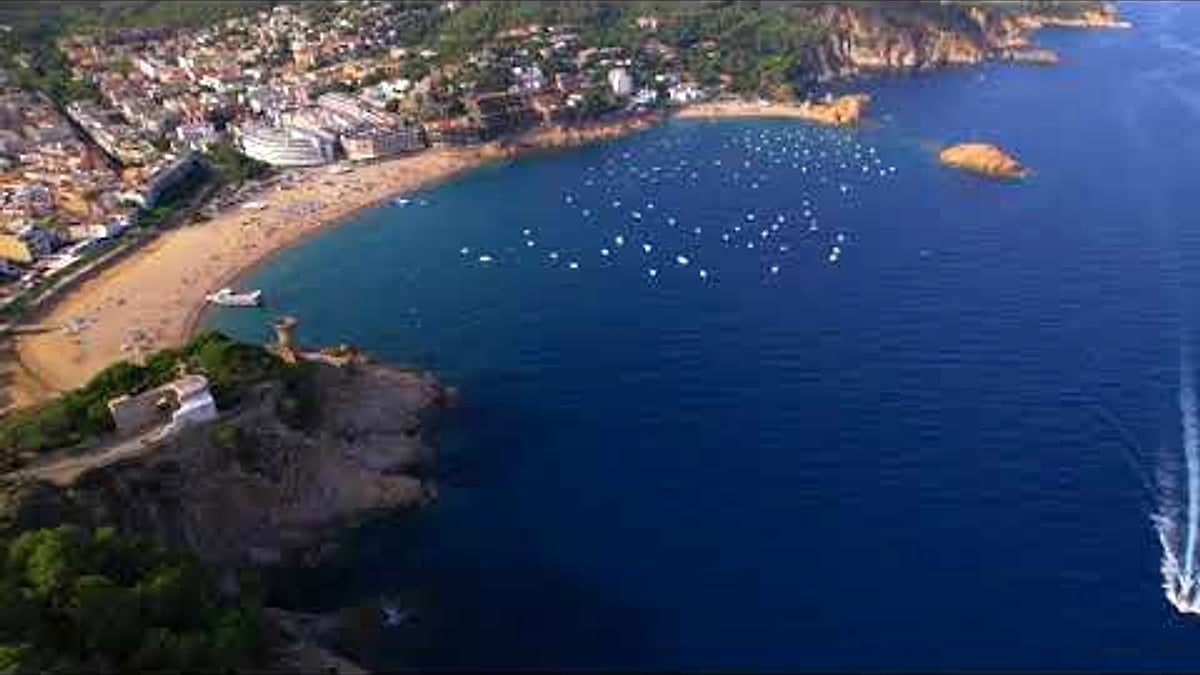
Blanes is 60 kilometres northeast, a 1 hour 20 to 1 hour 30 minute direct train ride on the R1 line, the last stop on this route with rail access.
Local guides often call it the gateway to the Costa Brava, since its station also connects by bus to Lloret de Mar and Tossa de Mar. The town beach stretches along an old-fashioned seafront, and the Marimurtra botanical garden sits on the cliffs above it.
South of the town centre, S’Abanell beach runs for about 2.2 kilometres, separated from the main beach by Sa Palomera, a rocky outcrop that marks the official start of the Costa Brava.
What Are the Most Beautiful Beaches Near Barcelona on the Costa Brava?
The Costa Brava beaches near Barcelona sit further north, past the reach of direct trains. They are known for clear coves, rocky headlands, and whitewashed villages rather than long open sand.
Tossa de Mar
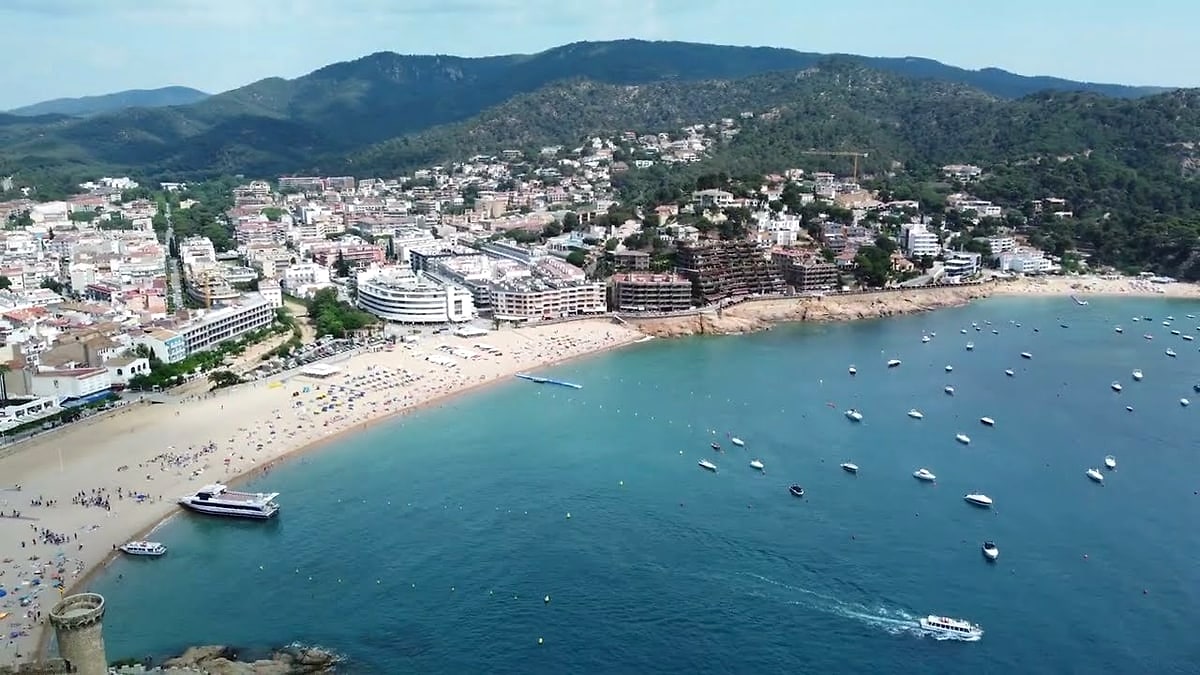
Tossa de Mar is approximately 90 kilometres northeast by road. No direct train serves the town; the trip takes 1 hour 20 minutes to 1 hour 30 minutes by bus, or about 1 hour by car.
A medieval walled Old Town, Vila Vella, sits on a rocky headland directly above the main beach, Platja Gran, which runs for about 380 metres and is one of the few fortified town beaches left on the Catalan coast.
A second, quieter beach, Mar Menuda, sits just around the headland.
Calella de Palafrugell
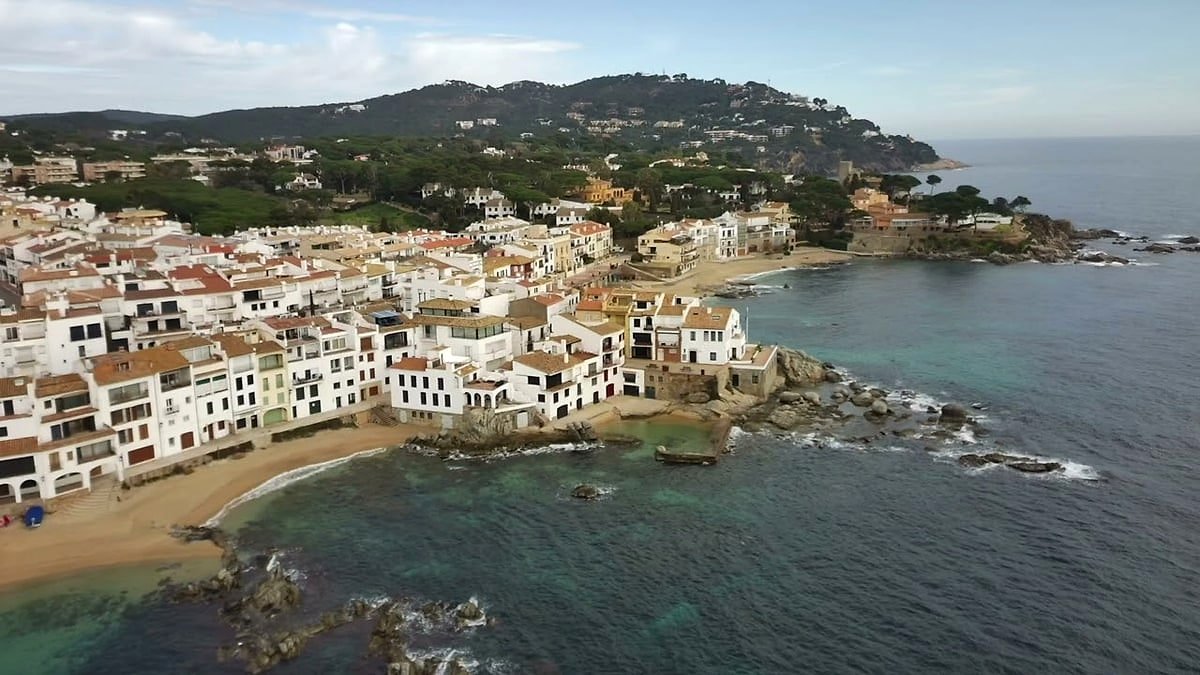
Calella de Palafrugell is approximately 125 kilometres northeast by road, a 1 hour 30 minute drive. No train station serves the town directly.
Whitewashed fishing cottages line a row of small coves, and the beaches carry Blue Flag status for water quality. The coastline continues south for about 2 kilometres to El Golfet beach, near the Cap Roig botanical gardens.
Roses
Roses is approximately 156 kilometres northeast by road, a 1 hour 45 minute to 2 hour drive. It sits on a wide bay at the northern end of the Costa Brava and holds Catalonia’s largest fishing fleet.
Long sandy beaches and steady wind make it a base for sailing and windsurfing, and the Aiguamolls de l’Empordà wetland park lies just south of town. A 16th-century fortress, the Ciutadella de Roses, overlooks the bay from the old town.
Cadaqués
Cadaqués is approximately 172 kilometres northeast by road, a 2 to 2.5 hour drive. It has no train station, so a car or a bus-and-taxi combination is the only practical route.
Whitewashed houses and cobbled streets surround a rocky bay, and Salvador Dalí’s house sits in the neighbouring cove of Portlligat. The drive in from Figueres crosses Cap de Creus, a rugged natural park that shaped much of Dalí’s surrealist imagery.
Latest Posts

What to Pack for a Beach Vacation: A Complete Checklist

Why Is Myrtle Beach So Dangerous? Crime Rates, Ocean Hazards,

How Far Is Los Angeles to Long Beach, California? Distance,
Which Beaches in Acapulco Are Unswimmable? 4 Officially Contaminated in

How Far Is Charleston From Myrtle Beach? Distance and Travel
How Far Is Orlando to Daytona Beach? Distance and Travel
Best Beaches in Portugal: Top Picks by Region for 2026
Bogatell Beach vs Barceloneta Beach: How Do They Compare?
The Dutch North Sea Coast: A 450-Kilometer Guide From Texel

Leiden, Netherlands: 13 Museums, Historic Canals, and the Nearest Beaches
Beaches Near Amsterdam: 4 Best Beaches by Train & Bus
Best Beaches in the Netherlands
No post found
How Do You Choose the Right Beach Near Barcelona?
Four factors separate the 12 beaches near Barcelona: distance, train access, crowd level, and activity type.
Distance determines whether a beach works as a half-day trip or requires a full day. Beaches under 40 kilometres, including Castelldefels, El Masnou, Garraf, and Sitges, fit into a half-day visit.
Beaches past 90 kilometres, including Tossa de Mar, Roses, and Cadaqués, need a full day or an overnight stay.
Train access narrows the list further. Two Rodalies de Catalunya lines serve this stretch of coast.
The R2 Sud line runs southwest through Castelldefels, Garraf, Sitges, and Vilanova i la Geltrú. The R1 line runs northeast through El Masnou, Sant Pol de Mar, Calella, and Blanes.
Beyond Blanes, no direct train exists, and visitors need a bus, car, or a train-to-bus connection.
Crowd level varies by both distance and season. Castelldefels and Sitges draw the heaviest weekend crowds because of their short travel time.
Garraf, Vilanova i la Geltrú, and the Costa Brava towns past Blanes see fewer day-trippers and a more local atmosphere.
Activity type also separates the towns. Castelldefels and Roses suit windsurfing and kitesurfing.
Sitges suits nightlife and an LGBT-friendly scene. Tossa de Mar and Cadaqués suit scenery and historic architecture over beach space.
What Is the Difference Between the Costa del Garraf and the Costa Brava?
Three distinct coastlines make up the beaches near Barcelona, and each has a different shape, sand type, and pace.
The Costa del Garraf, south of Barcelona, runs flat and open, backed by the limestone cliffs of the Garraf Natural Park. Beaches here, including Castelldefels and Sitges, are wide, sandy, and built up with promenades, hotels, and restaurants close to the water.
The Maresme coast, north of Barcelona up to Blanes, follows a similar pattern: long, flat, sandy beaches backed by small commuter towns rather than resort infrastructure. El Masnou, Calella, and Blanes’s S’Abanell beach all fit this profile.
The Costa Brava begins at Sa Palomera, the rock outcrop in Blanes, and changes character immediately. Cliffs replace open sand, beaches shrink into coves, and the water turns a noticeably clearer turquoise due to the rockier seabed.
Tossa de Mar, Calella de Palafrugell, and Cadaqués all sit on this stretch. Rail access also ends at Blanes, which is why every Costa Brava town on this list requires a bus or car.
How Do You Reach the Beaches Near Barcelona Without a Car?
Two Rodalies de Catalunya commuter lines cover most of the beaches on this list. The R2 Sud line departs from Barcelona Sants, Passeig de Gràcia, and Estació de França, running southwest to Castelldefels, Garraf, Sitges, and Vilanova i la Geltrú.
The R1 line departs from the same stations, running northeast to El Masnou, Sant Pol de Mar, Calella, and Blanes.
Trains on both lines run every 15 to 30 minutes during the day. One-way tickets cost between 2 and 10 euros, depending on distance, and tickets bought in Barcelona need validation before boarding.
Travellers arriving by air can skip the city centre entirely for the southwest beaches. Barcelona-El Prat Airport sits about 15 kilometres from Castelldefels, a 10 to 16 minute taxi ride costing roughly €20 to €25.
The R2 Sud line also connects the airport directly to Castelldefels, Garraf, Sitges, and Vilanova i la Geltrú without a transfer through central Barcelona.
Beyond Blanes, train coverage ends. Tossa de Mar requires a bus, available from Barcelona’s Estació del Nord or from Blanes station.
Calella de Palafrugell, Roses, and Cadaqués require a car, a long bus connection through Girona or Figueres, or a private transfer.
What Does a Day Trip to the Beaches Near Barcelona Cost?
The beaches themselves are free. The main costs are transport and beach equipment.
A round-trip train ticket ranges from about €4 for Castelldefels, the closest stop, to around €18 for Blanes, the furthest point with direct rail access. Tickets bought at the station need validation at the platform machine before boarding.
A sunbed and parasol typically cost €15 to €20 for the pair per day on the Costa del Garraf and Maresme beaches, rented directly from operators on the sand. Beach bars and chiringuitos charge similar prices to a casual restaurant in central Barcelona for food and drinks.
Towns past Blanes add a bus ticket, car rental, or fuel cost on top. That generally makes a Costa Brava day trip more expensive than a trip to the Costa del Garraf or Maresme beaches.
Which Beach Near Barcelona Is Best for Families, Nightlife, or a Quiet Day?
Families find the calmest, most sheltered water at Garraf, El Masnou, and Calella de Palafrugell, all of which combine small beaches with low boat traffic.
Nightlife centres on Sitges, with the widest range of bars and clubs of any town on this list, followed by Castelldefels for a quieter beachfront scene.
A quiet day away from crowds points toward Vilanova i la Geltrú, Sant Pol de Mar, or Roses, three towns that draw fewer day-trippers than their neighbours despite comparable beach quality.
Watersports favour Castelldefels and Roses, both known for consistent wind and established kitesurfing and windsurfing schools.
No car required narrows the list to the 8 towns on the R1 and R2 Sud lines: Castelldefels, Garraf, Sitges, Vilanova i la Geltrú, El Masnou, Sant Pol de Mar, Calella, and Blanes.
When Is the Best Time to Visit Beaches Near Barcelona?
The swimming season near Barcelona runs from June to October, when sea temperatures stay above 20°C. Water temperature peaks in August at an average of 24°C and drops to its lowest point in February and March, at around 13°C, according to long-term sea temperature data.
July and August bring the largest crowds to Castelldefels and Sitges, the two closest, most accessible beaches. June and September offer warm water with fewer visitors, particularly on the Costa Brava beaches further from the city.
Beach services, including lifeguards and equipment rental, typically run from late May to mid-September across the region.
Frequently Asked Questions About the Best Beaches Near Barcelona
What is the closest beach to Barcelona?
El Masnou is the closest beach town at 16 kilometres northeast, a 25 to 30 minute train ride. Castelldefels is the closest beach to the southwest, at 20 kilometres and a similar train time.
What is a nice beach near Barcelona for a day trip without a car?
Sitges is the most common choice for a car-free day trip, reachable in 35 to 40 minutes by train, with 17 beaches and a walkable historic centre. Castelldefels works for the shortest possible trip, at 25 to 30 minutes by train.
Are the beaches near Barcelona sandy or rocky?
The Costa del Garraf beaches south of Barcelona, including Castelldefels, Garraf, and Sitges, are mostly sandy. The Costa Brava beaches further north, including Tossa de Mar, Calella de Palafrugell, and Cadaqués, mix sandy stretches with rocky coves.
What is the most beautiful beach near Barcelona?
Calella de Palafrugell and Cadaqués are the two most photographed beaches on this list, both known for clear turquoise water, whitewashed buildings, and a Costa Brava coastline shaped by coves rather than open sand.
Can you reach the Costa Brava beaches near Barcelona by train?
Direct trains reach Maresme towns up to Blanes, including El Masnou, Sant Pol de Mar, and Calella. Costa Brava towns further north, including Tossa de Mar, Calella de Palafrugell, Roses, and Cadaqués, require a bus, car, or a train-to-bus connection through Girona or Figueres.
What is the best beach near Barcelona for swimming?
Garraf and El Masnou both offer sheltered, calm water suited to swimming rather than watersports. Castelldefels and Roses see stronger wind and waves, which suits surfing and sailing more than relaxed swimming.
How far are the beaches around Barcelona from each other?
The 4 beaches south of Barcelona span 20 kilometres between Castelldefels and Vilanova i la Geltrú.
The 8 beaches north of Barcelona span a much wider range, from El Masnou at 16 kilometres to Cadaqués at 172 kilometres, since the Costa Brava extends much further along the coast than the Costa del Garraf.
Is there a naturist beach near Barcelona?
Sitges has two naturist beaches, Balmins and Platja del Muerto, both within walking distance of the town centre. Castelldefels and Garraf do not have dedicated naturist sections.
Can you visit more than one beach near Barcelona in a single day?
Castelldefels, Garraf, Sitges, and Vilanova i la Geltrú all sit on the same R2 Sud train line within 40 kilometres of each other, which makes it possible to combine two of them in one day. The Costa Brava towns sit too far apart for that approach and work better as single-destination trips.