

Beach Towns Near Barcelona: 4 Seaside Towns Worth Staying In
Barcelona connects to 4 coastal towns that function as independent overnight destinations: Sitges, Calella, Blanes, and Tossa de Mar. Each town sits within 90 minutes of the city by public transport and provides beaches, local character, and accommodation suited to stays of 1 to 3 nights. For a wider day-trip shortlist, the best beaches near Barcelona guide covers nearby beaches beyond overnight town stays.What Are Beach Towns Near Barcelona?
Beach towns near Barcelona are coastal municipalities on the Mediterranean coast of Catalonia. For the wider regional shortlist, see the best beaches in Catalonia. These seaside towns differ from Barcelona’s urban beaches. They offer quieter streets, smaller crowds, and a pace suited to overnight stays rather than quick beach visits. The 3 coastlines connecting Barcelona to these towns are:- Costa Garraf (south of Barcelona, home to Sitges)
- Costa del Maresme (north of Barcelona, home to Calella)
- Costa Brava (northeast of Barcelona, home to Blanes and Tossa de Mar)
How Do the 4 Best Beach Towns Near Barcelona Compare?
The 4 beach towns near Barcelona each serve different stay preferences. The table below compares distance, transport, travel time, and best traveler type.Which Beach Town Near Barcelona Is Best for Couples?
Sitges is the best beach town near Barcelona for couples. It holds 9 Blue Flag beaches, a well-preserved old town with 17th-century architecture, and a seafront promenade suited to evening walks.Which Beach Town Near Barcelona Is Best for Families?
Calella is the best beach town near Barcelona for families. Playa del Garbi beach includes 2 soccer pitches, 9 volleyball courts, and an offshore waterpark along over 800 meters of sand.Which Beach Town Near Barcelona Is Best for Budget Travelers?
Calella provides the most affordable coastal stay near Barcelona. The town offers budget accommodation across hotels, hostels, and self-catering apartments within walking distance of the beach.Sitges
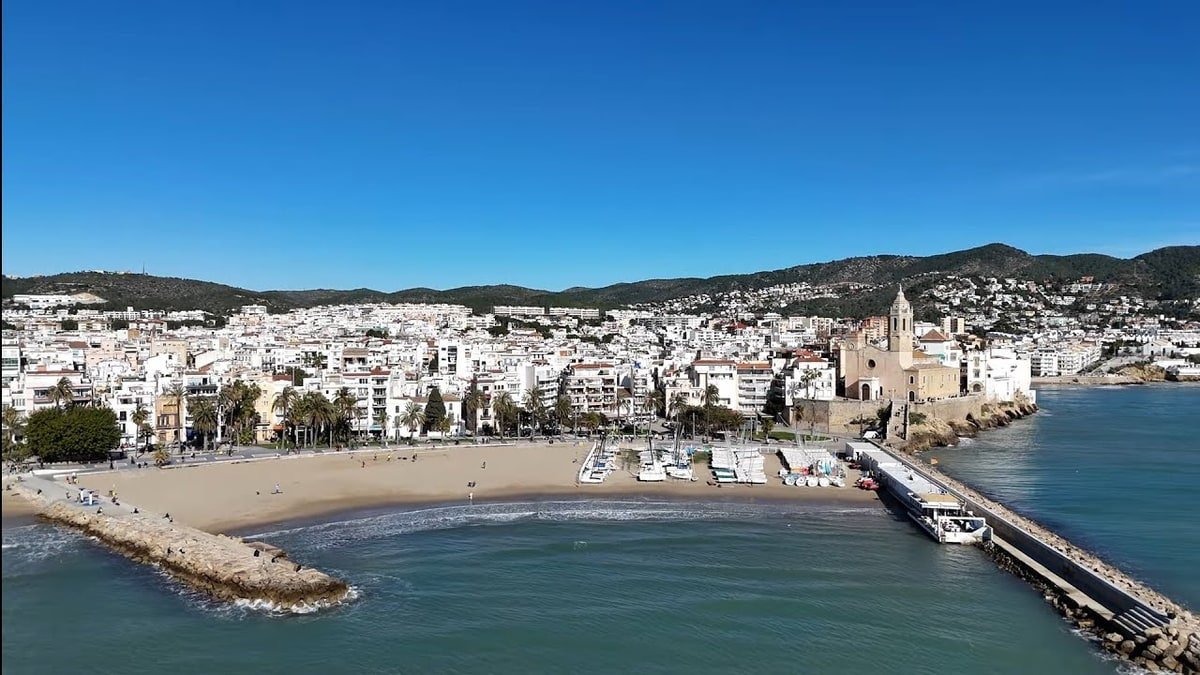
Sitges is a coastal town located 42 km south of Barcelona on the Costa Garraf. The R2 Sud train from Barcelona Sants or Passeig de Gràcia reaches Sitges in 35 minutes. Trains depart every 15 to 30 minutes throughout the day.What Is Sitges Known For?
What Are the Beaches in Sitges?
Sitges provides 17 beaches across 5 categories:- Family beaches (La Ribera, Terramar): central, full facilities, calm water
- Urban beaches (Sant Sebastià): close to the old town, busy in summer
- LGBTQ+ beaches (Balmins): quieter, south of the main strip
- Natural cove beaches (Garraf): 1,415 meters, within Garraf Natural Park
- Sheltered beaches (Aiguadolç): close to the marina, sandy
How Do You Get to Sitges from Barcelona?
The R2 Sud train from Barcelona Sants or Passeig de Gràcia reaches Sitges in 35 minutes. The train station sits a 10 to 15 minute walk from the main beach and the old town. Trains run with high frequency, making same-day return trips straightforward for those staying elsewhere.Calella
Calella is a coastal town located 58 km northeast of Barcelona on the Costa del Maresme. The R1 regional train from Barcelona Sants reaches Calella in approximately 60 minutes. The route runs along the coastline for much of the journey.What Is Calella Known For?
Calella is known for Playa Grande, its main beach running the full length of the town, the Church of Santa Maria and Sant Nicolau, and the Víes Braves open-water swimming route. The church dates to the 16th century and its bell tower rises over 40 meters, making it visible from most of the town. The Víes Braves is a marked swimming route along the full coastline. It connects Calella’s beaches to surrounding coves, allowing swimmers to explore the sea bed at multiple points. This route makes Calella a practical base for visitors focused on water-based activity over multiple days.What Are the Beaches in Calella?
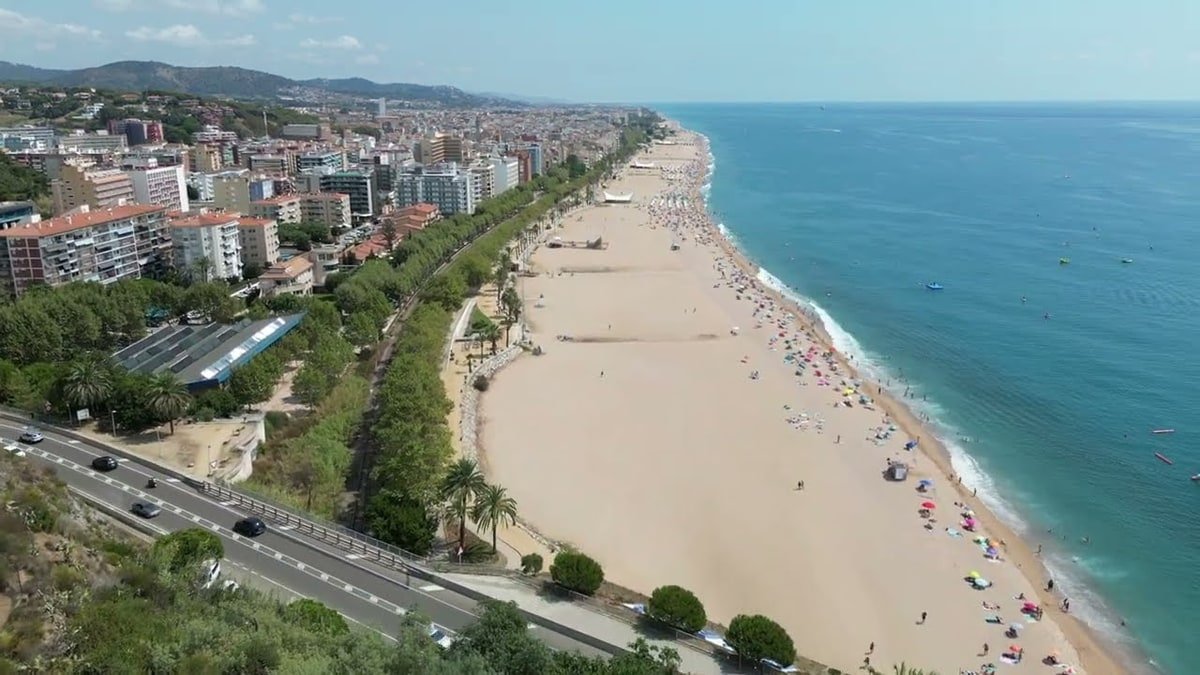
- Playa Grande (main beach, runs the full town length, promenade access, dozens of restaurants)
- Platja del Garbi (800 meters, 2 soccer pitches, 9 volleyball courts, offshore waterpark)
- Platja de les Roques (quieter, rocky coves, clear water, suited to snorkeling)
How Do You Get to Calella from Barcelona?
The R1 train from Barcelona Sants reaches Calella in 60 minutes. The station sits at the edge of the town center, within walking distance of all 3 beach areas. Boat trips from Calella connect to Blanes and Lloret de Mar during the summer season.Blanes
Blanes is a coastal town located 72 km northeast of Barcelona. It is identified as the southern gateway to the Costa Brava. The R1 train from Barcelona Sants reaches Blanes in approximately 75 minutes.What Is Blanes Known For?
Blanes is known for 2 botanical gardens, a working fishing port, the Sa Palomera rock formation, and an International Fireworks Competition held each July. The Jardí Botànic Marimurtra sits on a clifftop above the Mediterranean and contains over 4,000 plant species from around the world. The Pinya de Rosa Tropical Garden focuses on cacti and succulents in a semi-wild setting. The International Fireworks Competition spans over 100 years of tradition and draws large crowds to the town beaches every summer. Water activities in Blanes include kayaking, paddle surfing, windsurfing, and kitesurfing, available from the S’Abanell beach area. A stay of 2 nights provides enough time to visit both gardens, swim at multiple beaches, and explore the port area.What Are the Beaches in Blanes?
- S’Abanell (2,200 meters long, 60 meters wide, north of Sa Palomera rock)
- Platja Blanes (main town beach, south of Sa Palomera rock, full facilities)
- Cala Sant Francesc (rocky cove, access through the Marimurtra Garden path)
- Cala Treumal (between Blanes and Lloret de Mar, pine-backed cliffs, calm water)
How Do You Get to Blanes from Barcelona?
The R1 train from Barcelona Sants reaches Blanes in 75 minutes. The station sits close to the town center. From Blanes, buses depart north toward Tossa de Mar, making Blanes a practical base for travelers planning to explore multiple Costa Brava towns during a single stay.Tossa de Mar
Tossa de Mar is a coastal town located 84 km northeast of Barcelona on the Costa Brava. Moventis operates direct buses from Barcelona Estació d’Autobusos Nord hourly. The journey takes 1 hour and 20 minutes. Tickets cost between $17 and $30.What Is Tossa de Mar Known For?
Tossa de Mar is known for the Vila Vella, the only surviving fortified medieval town by the sea in Catalonia. The Vila Vella dates to the 12th century and contains stone streets, medieval towers, seafood restaurants, and boutique shops. The Torre de Joanas provides panoramic views of the bay from the top of the walls. The town combines 2 distinct environments: a medieval walled old town on the headland, and sandy beaches and rocky coves below. Local travel resources consistently recommend a minimum stay of 2 days to experience the Vila Vella, the coastal hiking trail, and the surrounding coves without time pressure.What Are the Beaches in Tossa de Mar?
Tossa de Mar provides 2 main beaches and a marked coastal trail:- Platja Gran (main sandy beach below the Vila Vella, Blue Flag, full facilities)
- Es Codolar (rocky cove on the opposite side of the headland, calmer water)
- Camí de Ronda (coastal hiking path connecting viewpoints and coves between Tossa de Mar and Lloret de Mar)

How Do You Get to Tossa de Mar from Barcelona?
The direct bus from Barcelona Estació d’Autobusos Nord, operated by Moventis, reaches Tossa de Mar in 1 hour and 20 minutes. Buses depart hourly. An alternative route combines the R1 train from Barcelona Sants to Blanes (75 minutes) followed by a connecting bus to Tossa de Mar.When Is the Best Time to Visit Beach Towns Near Barcelona?
The peak beach season across all 4 towns runs from June to September. Water temperatures reach their highest in July and August. Late spring (May to June) and early autumn (September to October) provide warm conditions with fewer visitors than the summer peak. Each town supports swimming from June to September.Which Beach Town Near Barcelona Suits Your Stay?
The 4 best beach towns near Barcelona each serve a distinct traveler type:- Sitges: 17 beaches, 9 Blue Flag certifications, old town, film festival, couples and LGBTQ+ travelers
- Calella: Playa Grande, Víes Braves swimming route, budget accommodation, families
- Blanes: 4,000-species botanical garden, 4 beaches, fireworks competition, nature travelers
- Tossa de Mar: 12th-century walled town, 2 beaches, coastal hiking, history and couples

Georgia Williams writes for Best Beaches Near Barcelona by riding the same Rodalies trains she sends readers to catch. She has done the quick R2 Sud run out to Castelldefels and Sitges more times than she can count, and the longer hauls north to Calella, Blanes, and the Costa Brava coves around Tossa de Mar, Roses, and Cadaqués.
She is not chasing sponsorships and she does not work with tourism boards. She has stood on enough train platforms recalculating a ruined plan to know that a beach photographed at sunrise with nobody in frame tells you almost nothing about what it looks like at noon in July.
Her writing compares sand, water, and crowd levels town by town, and says plainly when a popular spot has stopped being worth the trip. She also says when an overhyped beach is still genuinely good, because contrarianism for its own sake helps no one packing a beach bag on a Friday morning.