

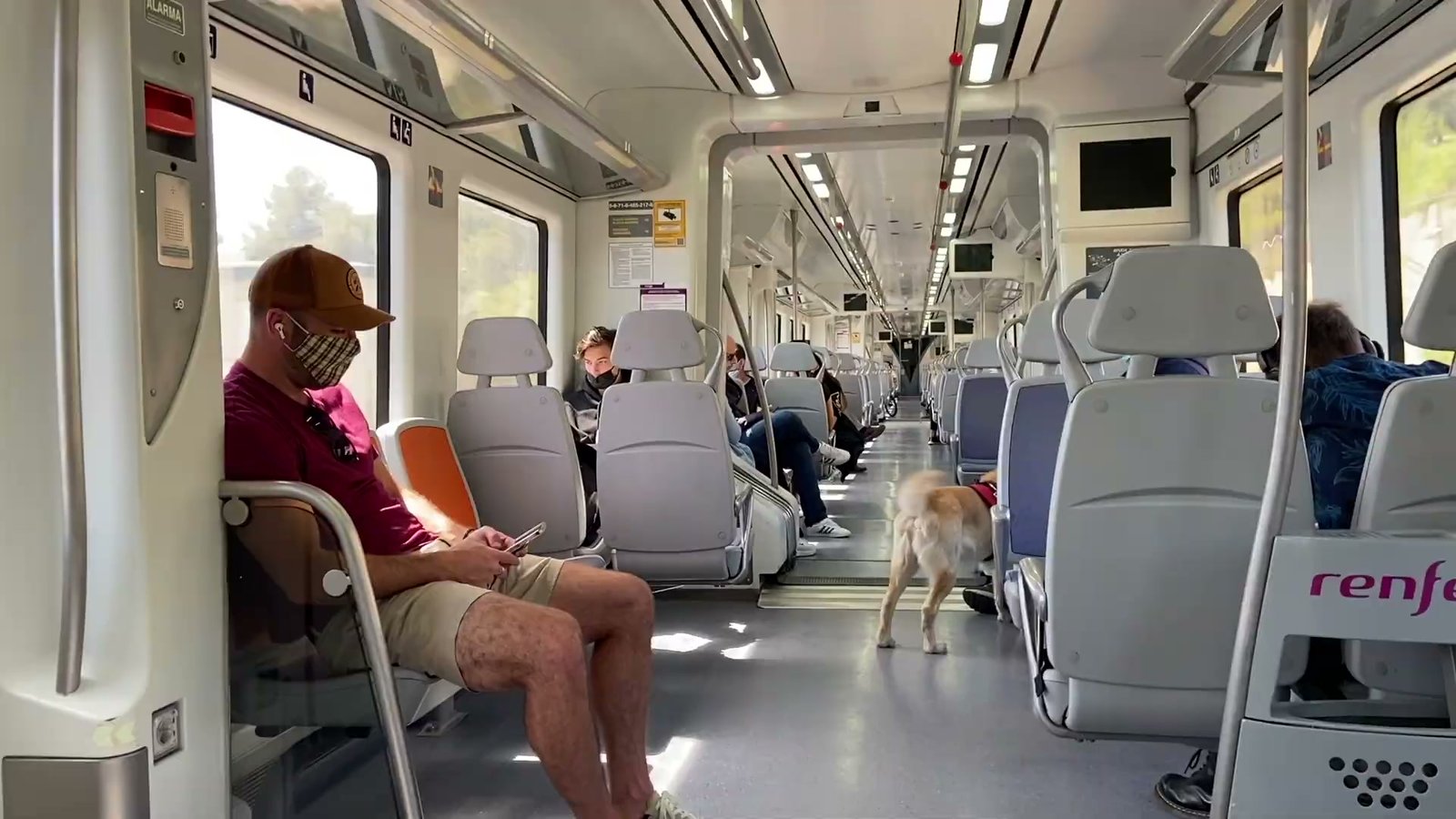
Take a Rodalies R2 Sud train from Barcelona Sants, Passeig de Gràcia, or Estació de França to Sitges station. The direct ride takes 31 to 55 minutes, depending on the departure station. Trains run about 4 times per hour, and single tickets start at about $5.50 on Trainline. This guide covers the stations, tickets, schedules, airport route, return trip, and walking times to the beaches.
What Is the Train From Barcelona to Sitges?
The train from Barcelona to Sitges is the Rodalies de Catalunya R2 Sud line, operated by Renfe. The line connects Barcelona with Sant Vicenç de Calders along the Garraf coast. Sitges is a stop on this route, about 35 km southwest of Barcelona, according to Trainline.
The table below summarizes the route. Each row lists one attribute and its value.
| Attribute | Value |
|---|---|
| Line | R2 Sud |
| Operator | Renfe (Rodalies de Catalunya) |
| Distance | 35 km (21 miles) |
| Journey time | 31 to 55 minutes |
| Frequency | About 4 trains per hour |
| Daily trains | Around 70 |
| Single fare | $5.50 to $6.60 |
Which Barcelona Stations Serve the Sitges Train?
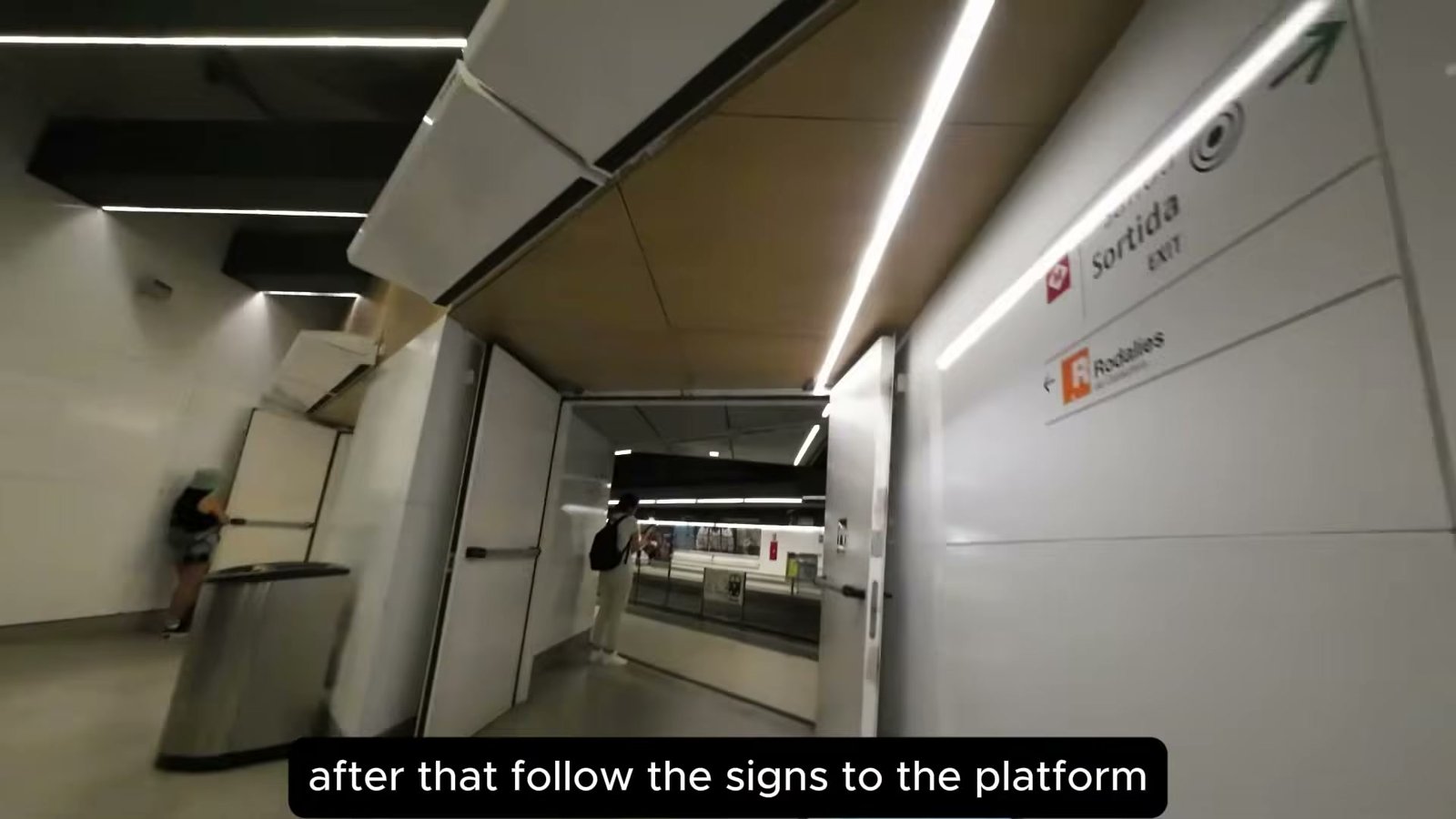
Three Barcelona stations serve the Sitges train: Barcelona Sants, Passeig de Gràcia, and Estació de França. According to Everyrail, almost every R2 Sud train calls at all three. A few early trains that continue as the R2 skip Estació de França.
The table below lists the journey time to Sitges by departure station, as of October 2026.
| Departure Station | Journey Time to Sitges | Trains per Hour |
|---|---|---|
| Barcelona Sants | 31 to 37 minutes | About 4 |
| Passeig de Gràcia | 38 to 44 minutes | About 4 |
| Estació de França | 49 to 55 minutes | About 4 |
Select the station nearest the starting point to reduce transfer time.
How Do You Get to Sitges From Barcelona by Train?
Follow 4 steps to reach Sitges from Barcelona by train.
- Choose a departure station: Barcelona Sants, Passeig de Gràcia, or Estació de França.
- Buy a single ticket: use a station ticket machine or an online retailer such as Trainline.
- Board the R2 Sud train: look for the "Sud" label on the departure board, because R2 Nord trains head the opposite direction, according to Travel Noire.
- Exit at Sitges station: the station is on Plaça Eduard Maristany, and the old town and seafront lie to the south, according to Everyrail.
How Often Do Trains Run From Barcelona to Sitges?
Trains run from Barcelona to Sitges about 4 times per hour, according to Everyrail. Trainline lists around 70 trains per day, with a first departure near 5:44 am and a last departure near 11:36 pm. Journey times may be longer on weekends and holidays.
Track works also change frequency. ARA reported that works on the Sitges to Garraf section reduced R2 Sud frequencies from March to June 2026. Everyrail reports no planned R2 Sud works into November 2026.
How Much Does the Barcelona to Sitges Train Cost?
A single ticket costs about $5.50 to $6.60, depending on the departure station, according to Trainline's US listings. Travel guides report euro single fares between €4.60 and €5.50. The operator updates tariffs each year, so ticket machines display the current fare.
How Do You Get to Sitges From Barcelona Airport by Train?
Take the R2 Nord from Barcelona-El Prat Airport Terminal 2 to Barcelona Sants, then change to an R2 Sud train to Sitges. According to Everyrail, R2 Nord trains serve the airport station every 30 minutes. Confirm the "Sud" label on the departure board at Sants before boarding.
How Do You Return From Sitges to Barcelona by Train?
Board an R2 Sud train toward Barcelona at Sitges station. Trainline lists around 71 daily departures, with a first train near 4:51 am and a last train near 10:38 pm. The ride takes from 35 minutes. Last departures vary by day, so check the timetable on the travel date.
What Is the Least Crowded Time to Take the Sitges Train?
Departures before 9:00 am or after 11:00 am avoid the 10:00 am peak in July and August. According to Tourism Attractions, morning R2 Sud trains from Barcelona Sants fill by 10:00 in summer.
How Far Is Sitges Station From the Beaches?
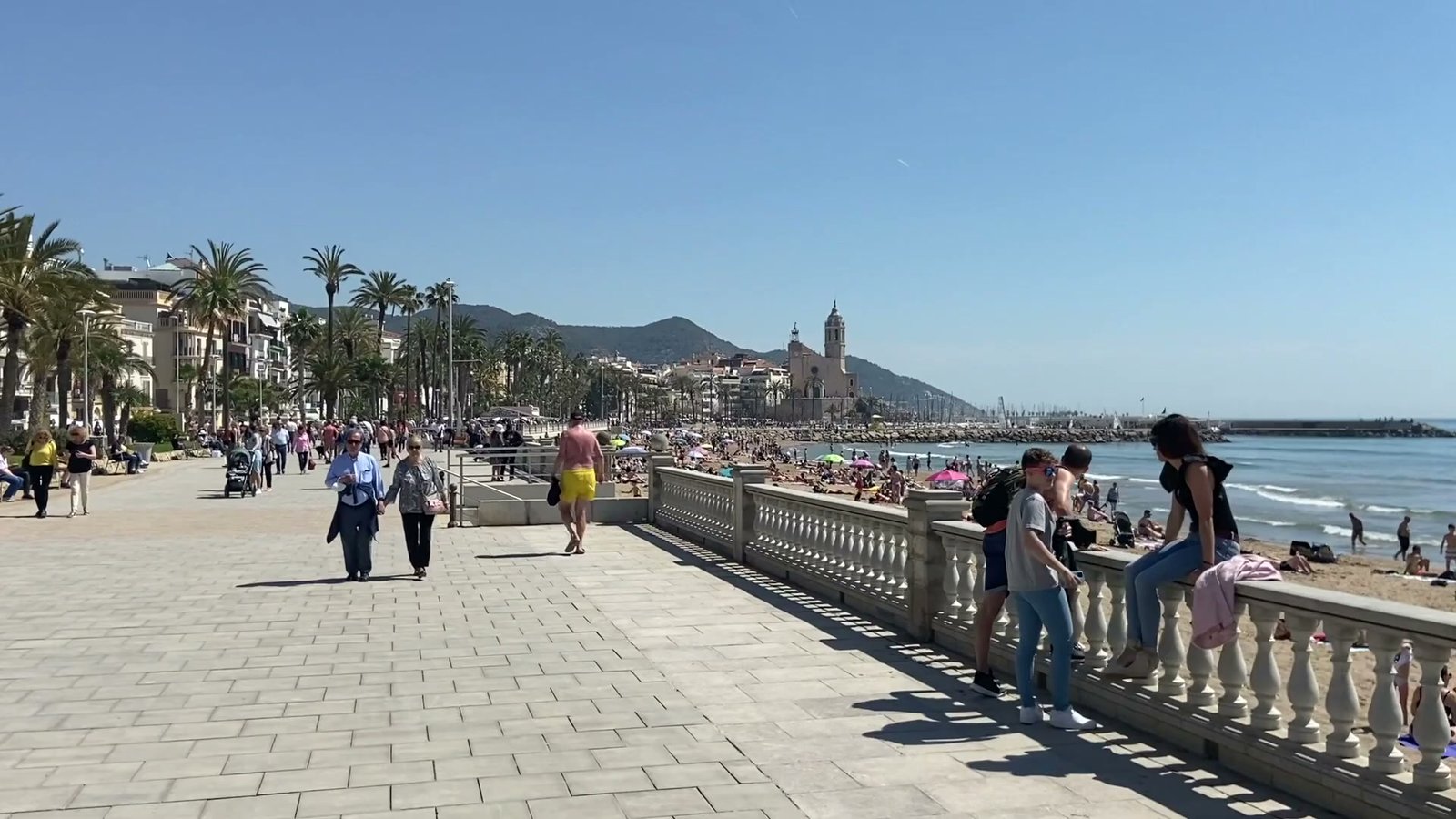
Sitges station is about 10 minutes on foot from the central beaches. According to Beach Atlas, Platja de la Fragata and Platja de la Ribera sit directly in front of the main town area. Sitges has close to 17 beaches along its coastline.
Walking times from Sitges station to 4 central beaches are listed below, according to Tourism Attractions and Beach Atlas.
- Platja de la Ribera: about 10 minutes
- Platja de Sant Sebastià: within 10 minutes
- Platja de la Fragata: within 10 minutes
- Platja dels Balmins: 15 to 20 minutes
Read more in best beaches near Barcelona without crowds.
What Are Common Questions About the Barcelona to Sitges Train?
Is There a Direct Train From Barcelona to Sitges?
Yes, direct R2 Sud trains run from Barcelona Sants, Passeig de Gràcia, and Estació de França to Sitges.
How Long Does the Barcelona to Sitges Train Take?
The train takes 31 to 55 minutes, depending on the departure station.
Does the Sitges Train Need a Reservation With a Rail Pass?
No, the R2 Sud needs no reservation with an Interrail pass as of October 2026, according to Everyrail.
Can Travelers Visit Sitges as a Day Trip From Barcelona?
Yes, trains run from about 5:44 am to 11:36 pm, and the ride takes 31 to 55 minutes each way.
What Is the Fastest Way to Get to Sitges From Barcelona by Train?
The fastest way is a direct R2 Sud train from Barcelona Sants, which takes 31 to 37 minutes. Trains from Passeig de Gràcia take 38 to 44 minutes, and trains from Estació de França take 49 to 55 minutes. The 4 steps are: choose a departure station, buy a single ticket, board the R2 Sud, and exit at Sitges station.

Georgia Williams writes for Best Beaches Near Barcelona by riding the same Rodalies trains she sends readers to catch. She has done the quick R2 Sud run out to Castelldefels and Sitges more times than she can count, and the longer hauls north to Calella, Blanes, and the Costa Brava coves around Tossa de Mar, Roses, and Cadaqués.
She is not chasing sponsorships and she does not work with tourism boards. She has stood on enough train platforms recalculating a ruined plan to know that a beach photographed at sunrise with nobody in frame tells you almost nothing about what it looks like at noon in July.
Her writing compares sand, water, and crowd levels town by town, and says plainly when a popular spot has stopped being worth the trip. She also says when an overhyped beach is still genuinely good, because contrarianism for its own sake helps no one packing a beach bag on a Friday morning.